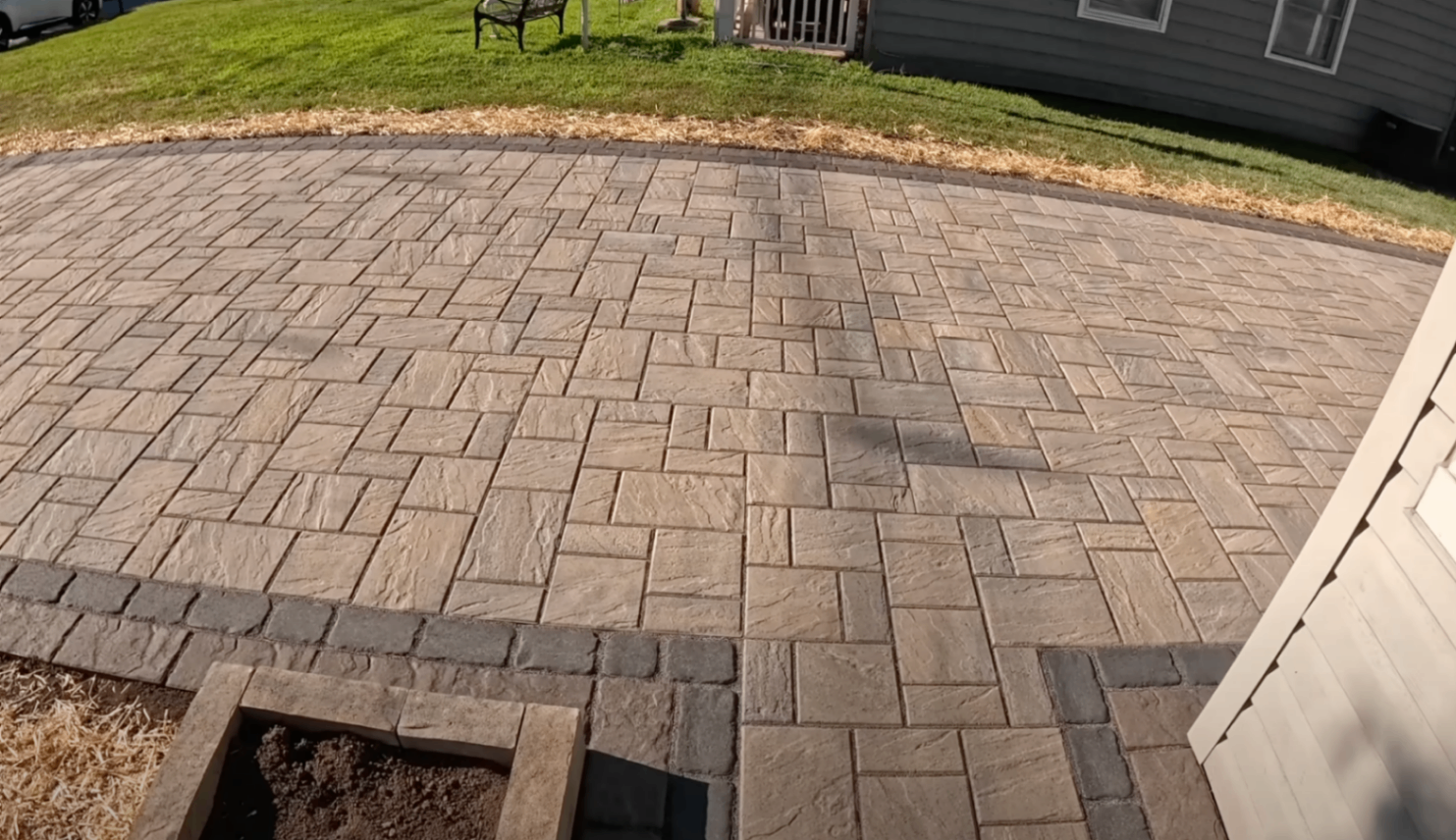
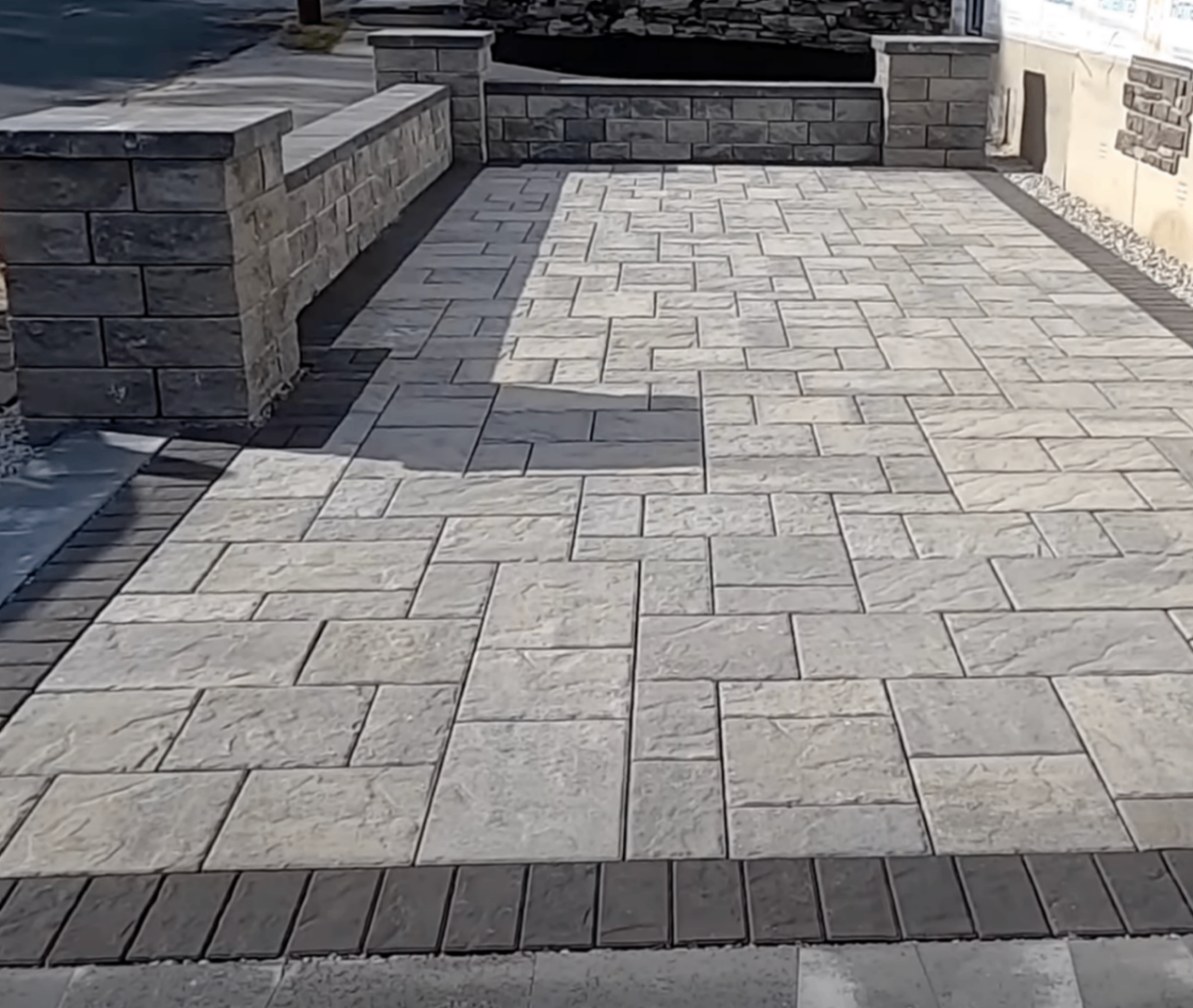
Patios designed around Dayton backyards and Miami Valley soil
What's under your yard depends on where you are. Up on the ridges - Kettering, Beavercreek, Centerville - it's clay till that drains slowly, traps water under a slab, heaves in a freeze, and shrinks away in a dry August. Down toward the rivers, it's gravelly outwash that behaves completely differently. We check what we're actually building on and match the base to it, because a one-size base design is guessing on half the metro.
Water handling is the other half of the job. Miami Valley storms drop real rain fast, and the most common patio mistake we correct is pitch running toward the house - a slab quietly delivering every storm to the foundation wall, then icing over at the back door in December. Our patios fall away from the structure at a steady grade, and downspouts get routed before the pour, because a gutter dumping under a slab edge will carve a void through clay in two seasons.
And then shade. The mature trees over Oakwood, Dayton View, and Belmont keep north-facing patios damp, and damp concrete grows a film and turns slick. Texture and sealer choice account for that, and we'll say when your yard needs more grip than the default.
How we build a patio that lasts in Dayton
Layout and use. Table for eight, grill station, fire pit, hot tub someday - use decides size, thickness, and where the joints belong. We paint the layout on the grass so you can walk it before we dig.
Excavation and base. Sod and topsoil out, subgrade compacted, crushed limestone base in compacted lifts. Roots in the dig zone cut cleanly, not torn.
Forms and grade. Set to fall away from the house, with an isolation joint against the foundation so the patio and the building never fight.
Steel and pour. Rebar or fiber matched to the slab, then air-entrained 4,000 PSI concrete - a patio sees the same winter a driveway does.
Finish and joints. Broom for grip, or a decorative option below. Control joints cut on time and placed to read as intentional lines.
Cure and handoff. Written timeline for foot traffic and furniture, sealer plan explained. Then it's yours.
Broom, colored, exposed aggregate, and stamped finishes
Broom finish is the honest default - clean, grippy when wet, easiest on the budget, and it ages without pretending to be something else. Most patios we pour are broom-finished and nobody regrets it.
Stamped Concrete presses slate, flagstone, or brick texture into the slab with color worked in - and in a freeze-thaw town it holds one real advantage over pavers: no joints for frost to heave individual stones out of level. Exposed aggregate trades smoothness for serious traction, a good call for shaded corners. Colored broom finish warms up the standard gray without stamped pricing.
Patios rarely travel alone, either. Steps down from a back door run through Concrete Steps and Stoops, and a hot tub or shed pad alongside runs through Concrete Slab Installation - one mobilization, one crew, one written price.
What affects the cost of concrete patio installation in Dayton
Size and shape lead - square footage drives material, and curves take more form work than straight runs. Access is the quiet driver: a yard the truck can chute into pours fast, while a fenced Belmont or South Park backyard where every yard rides a buggy through a 36-inch gate takes crew hours. Then the ground - extra excavation where clay is soft, grade corrections, downspout rerouting. Finish sets the top end, and extras like a thickened fire pit section get priced up front, in writing.
Dealing with Dayton-specific patio problems
Settling next to the house is the classic - foundation backfill stays looser than undisturbed ground for decades, so a patio poured on it without real compaction sinks toward the building, then drains toward it. Heaving comes with the clay till on the ridges. Downspout undermining is the most preventable failure on the list: one gutter outlet at a slab edge, two seasons, one void. Slickness rounds it out on the shaded north sides of the old tree neighborhoods. And existing patios with these problems aren't automatically tear-outs - some qualify for Concrete Repair and Resurfacing, and you'll get that verdict straight.
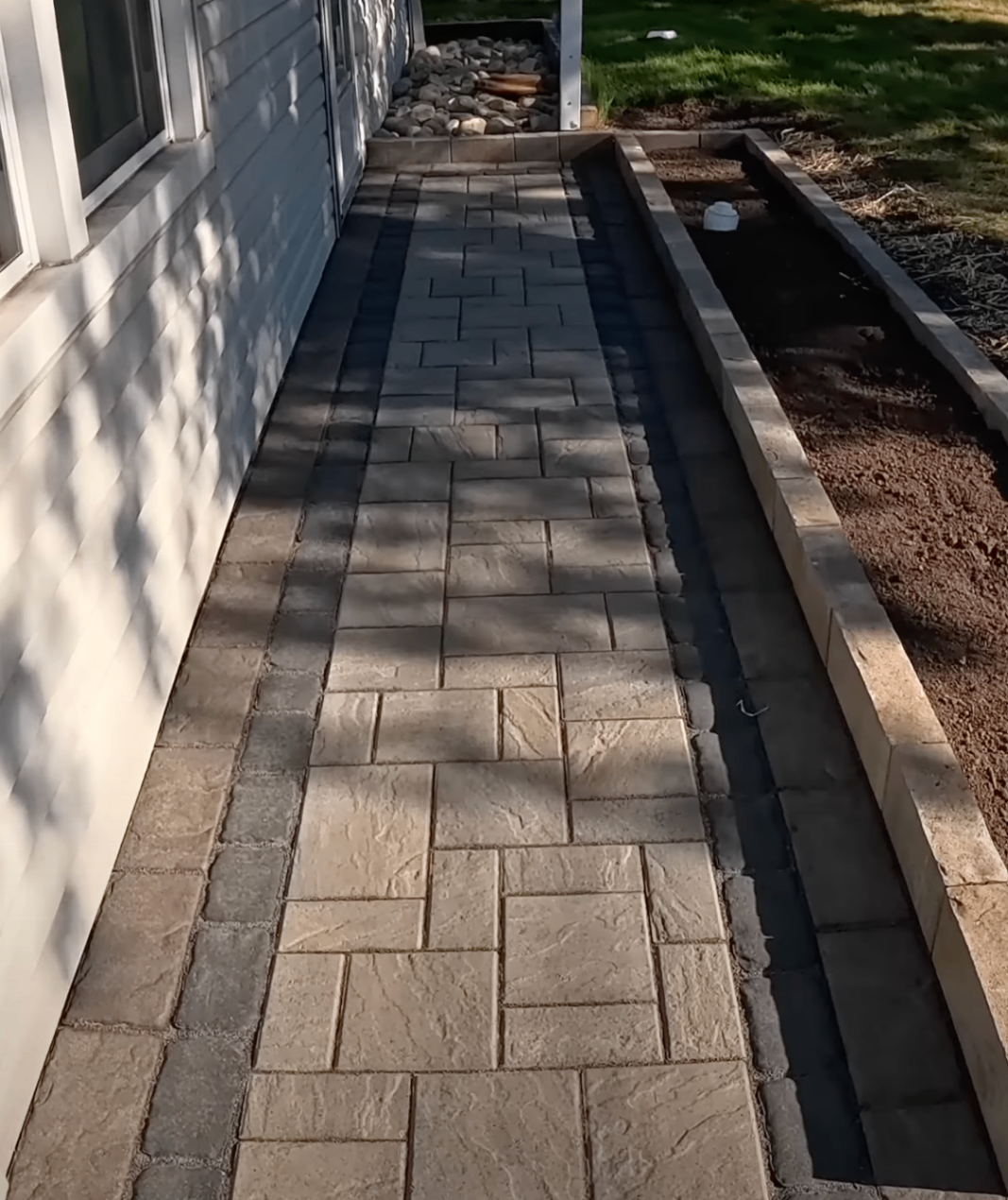
What Dayton homeowners should know before hiring a patio contractor
Ask where the water goes - a contractor who can't walk you through pitch, downspouts, and drainage on your specific yard is planning to find out during the pour, at your expense. Get the spec written: base depth, PSI, air entrainment, reinforcement, joint layout. On decorative work, ask to see the joint plan. Confirm insurance. And treat an unusually low bid like the clay itself: assume something soft is underneath.
Our process from design to first cookout
Call (937) 834-8390 or send the form. We walk the yard, talk through how you'll use it, check grade and gate access, and hand you a written price with spec and finish options. You approve it. We build base, pour, finish, cut joints, and leave the yard tidy - fence panels back where they came from. Walking in a day or two, furniture inside a week, first cookout whenever you're ready.
"Before a patio is comfortable, it has one job - send the water somewhere else."