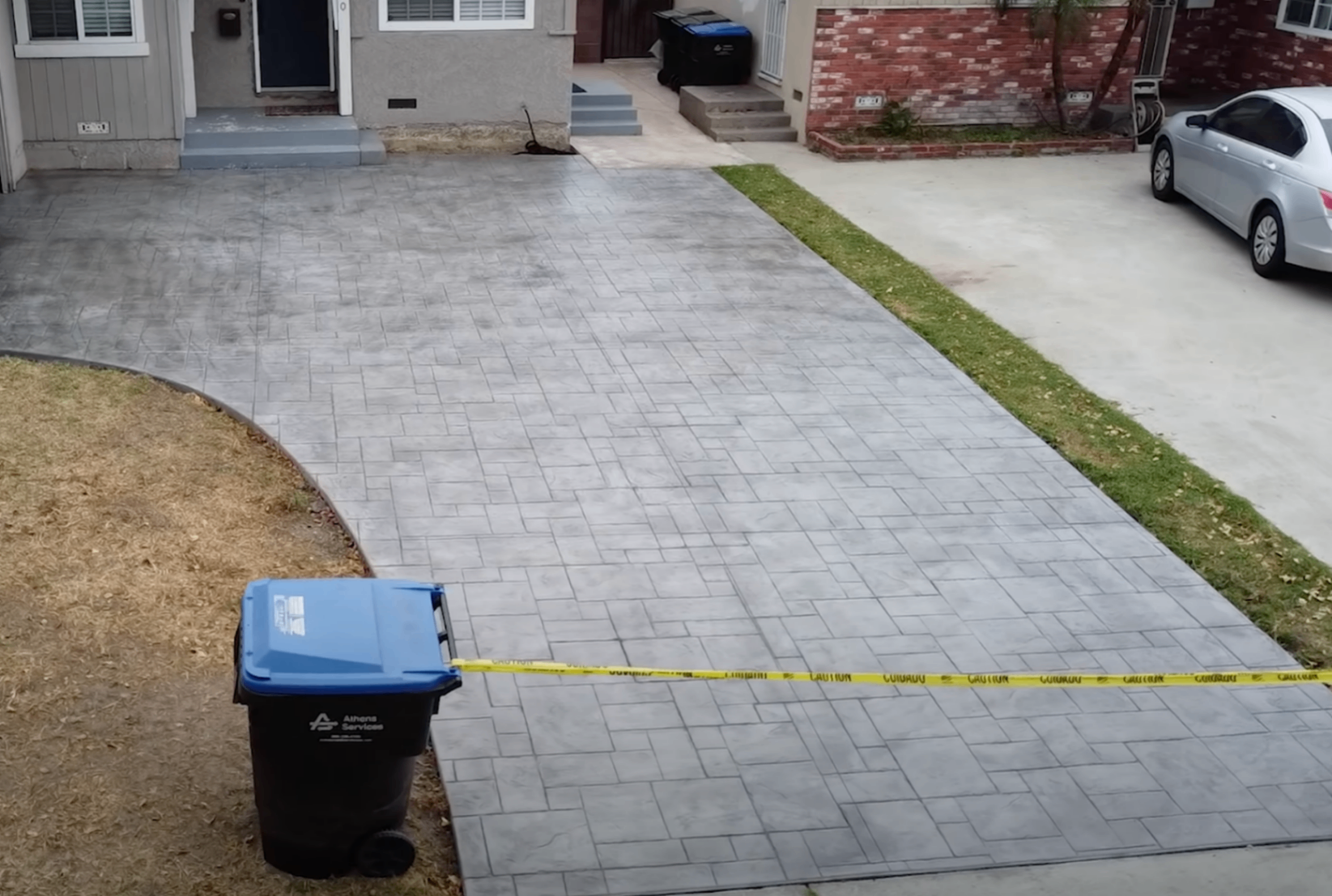
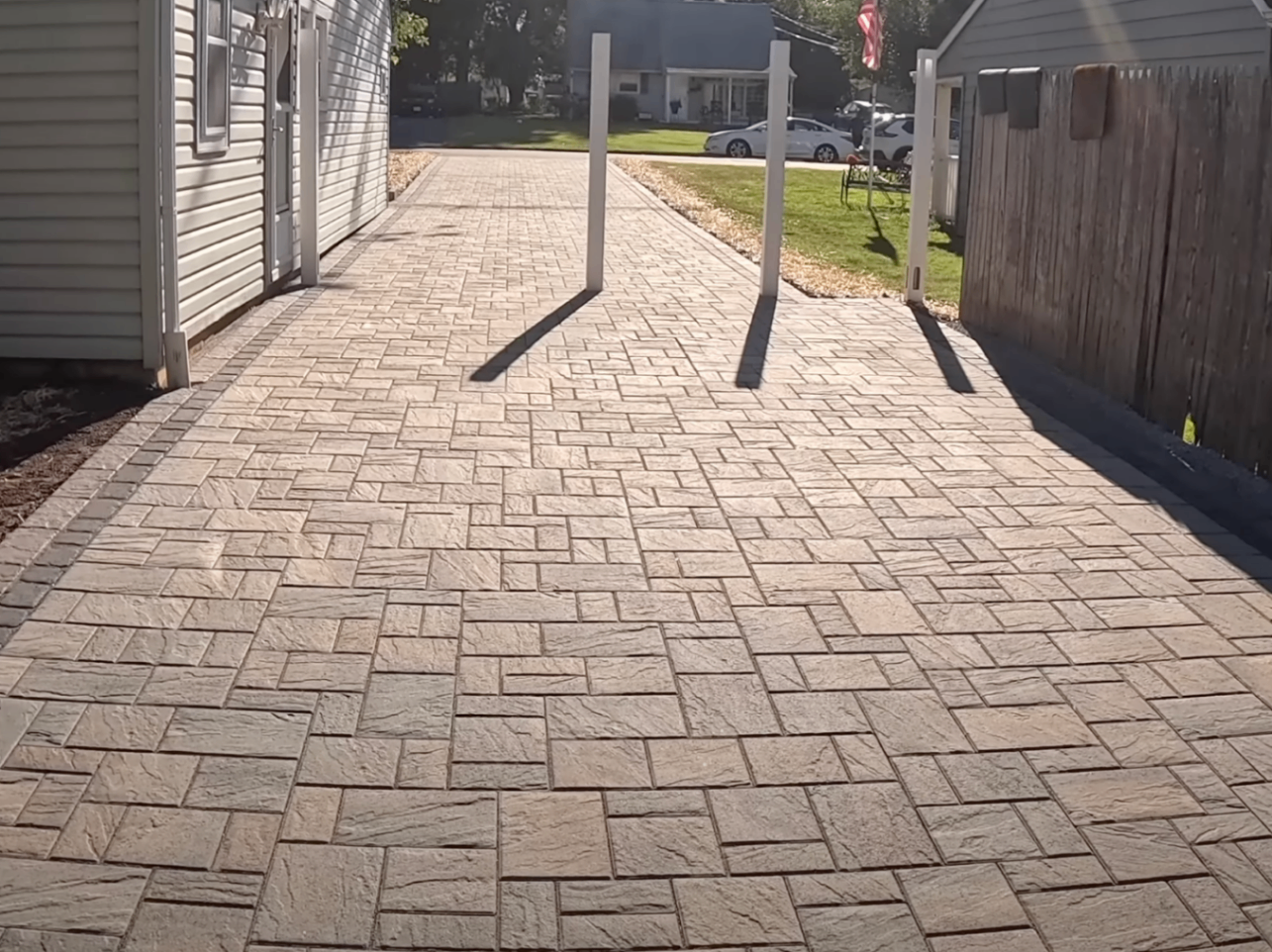
Driveways built for Dayton weather and Miami Valley ground
Your driveway fights three things here, and daily traffic is the least of them. Freeze-thaw comes first - water works into the slab, freezes, expands about nine percent, and levers the concrete apart from inside, fifty-odd times between November and March. Air-entrained concrete is the defense, billions of microscopic voids giving that water somewhere to expand. Deicer is second: salt accelerates scaling, and the flaked, pitted surfaces across Kettering and Huber Heights are chemical damage, not age. The ground is third, and Dayton's is genuinely split - clay till on the ridges that heaves and shrinks, sand-and-gravel outwash down in the river valleys that drains and bears well. Two driveways a mile apart can need different base designs.
The neighborhoods sort the work. Kettering and Riverside run postwar drives poured for 1950s sedans, now meeting three-quarter-ton trucks. Oakwood's garages sit off alleys behind the house, with approaches a mixer can barely thread. And single-car ribbon drives all over the older suburbs are getting widened for two-car households.
How we build a long-lasting driveway in Dayton
Layout and demolition. Saw-cut clean lines where new meets sidewalk and apron, break out the old slab, haul it off. Whatever's underneath - soft fill, roots, old cinder - gets handled, not buried again.
Base preparation. Subgrade compacted, crushed limestone built up and compacted in lifts. This is the step cheap bids shorten and the step that decides whether your driveway settles.
Forms, fall, and steel. Forms set so water runs away from the garage at a steady pitch. Rebar on chairs, in the middle third of the slab where it carries tension - mesh dropped in the mud reinforces nothing.
Pour and finish. Air-entrained 4,000 PSI concrete, screeded, floated, broom-finished for traction, edges tooled.
Joints cut on time. Early-entry saw the same day, spaced for the thickness, deep enough to actually control cracking. Isolation joints separate the drive from garage slab, walk, and foundation.
Cure and protection. Written timeline: foot traffic in a day or two, vehicles after about a week, full strength near 28 days. And no salt the first winter - sand instead.
Replacements, widening, and new pours matched to your property
Full replacement is the bread and butter, and where honesty matters most - overlays poured on a failed driveway fail with it, so when the old slab is done, we say so and price the real work.
Widening is a craft of its own: matching grade to a seventy-year-old ribbon, isolating the new strip so the old slab's movement can't crack it, blending the finish so it doesn't read as a patch. New pads and extensions - turnarounds, RV pads, the alley aprons behind Oakwood garages - get designed around load first. Where the project includes the front walk, our Concrete Sidewalk and Walkway crew folds it into the same mobilization.
The approach - the section crossing the public right-of-way - runs through city permitting and spec, and we handle that paperwork as part of the job.
What affects the cost of concrete driveway installation in Dayton
Square footage and thickness set the base, and truck-rated sections take more depth and steel. Demolition is next - breaking out and hauling a sixty-year-old slab is real labor. Site conditions carry the rest: clay till needing extra stone, grade corrections so water finally leaves, and access, which in Oakwood alleys and tight city lots can mean buggies instead of a chute. Finish moves the top end, broom as the workhorse, borders and Stamped Concrete accents above it. Permits pass through at cost. One written price covers all of it before demolition starts.
Dealing with Dayton-specific driveway problems
Salt scaling leads - flaking surfaces from deicer on concrete that was under-strength, over-finished, or never sealed. Settling clusters at the apron and at the squares nearest the garage where downspouts dump water under the slab; clay plus water plus freeze equals movement, so downspout routing is part of our design. Root heave runs third under the old street trees of Oakwood and Dayton View. And plenty of postwar drives were simply never built for today's vehicles - a slab poured for a '57 Chevy meets a modern truck and cracks along the wheel path.
What Dayton homeowners should know before hiring a driveway contractor
Get the invisible work in writing: base depth and compaction, PSI, air entrainment, reinforcement placement, joint spacing. A quote that only names thickness is telling you where its savings are hiding. Ask who pulls the approach permit, ask for the cure timeline and first-winter care, confirm liability and workers' comp. And weigh the low bid carefully - in driveway work the missing money almost always came out of the base, the steel, or the mix, all invisible on pour day and obvious by the third winter.
Our process from first call to finished driveway
Call (937) 834-8390 or send the form. We measure, check grade and truck access, and hand you a written price with the full spec. You approve it. We demo, build base, pour, finish, cut joints, and sweep the site, and you get a cure timeline in writing and a driveway built for the winters it's actually going to live through.
"Anyone can finish concrete smooth. The base under it is where the next twenty years get decided."